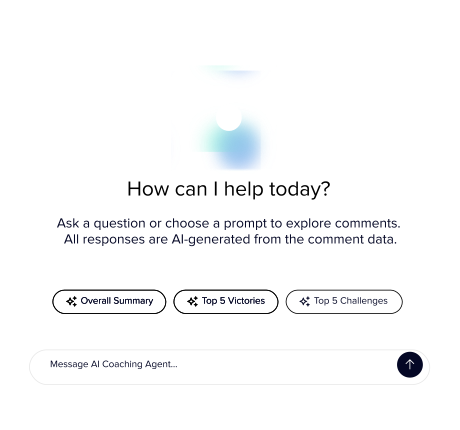

Turn Every Comment into Insight
The Narrative Analysis Agent reads every open-text employee response, detects themes, sentiment, and intent, and surfaces the verbatim quotes that anchor your action plan, in a conversational interface any HR practitioner can use.
The Narrative Intelligence Layer
The Perceptyx Narrative Analysis Agent ingests open-text feedback from employee surveys and third-party platforms like Glassdoor and LinkedIn, and uses discriminative AI to detect sentiment, intent, and the subtext that surface-level word counts miss.
- 70,000+ open-text comments at Nokia in a single annual survey cycle
- 20-point gap between organizations sharing survey results and driving change
- 11x more likely to achieve high engagement when listening connects to action
Where the Narrative Analysis Agent Makes the Biggest Difference

Save Thousands of Hours of Manual Analysis
"We have 60,000 open-text responses and a team of two."
The Narrative Analysis Agent reads and synthesizes thousands of open-text comments in minutes, replacing the weeks of manual review that keep People Analytics teams stuck in data instead of driving action.

Detect Patterns Humans Miss
"The comments tell us ten different stories and we can't tell which ones to prioritize.”
Discriminative AI surfaces sentiment, intent, and subtext across your full comment dataset, catching the emotional weight and through-lines that manual review and keyword searches overlook.

Ground Every Action Plan in Employee Language
"Leadership wants to see real examples of the issues we’re flagging, not a slide full of our paraphrasing."
The agent surfaces verbatim employee quotes representative of key themes, so leaders and HRBPs act in response to actual employee voice rather than analyst interpretation.

Put Insight in the Hands of Those Who Need It
“I wish I could dig into my team’s feedback directly for additional context on things that aren’t clear.”
A conversational interface lets HRBPs and managers query their own population's feedback directly, with demographic filters and anonymization built in, so they can ask clarifying questions that help uncover nuance and enable more effective action.
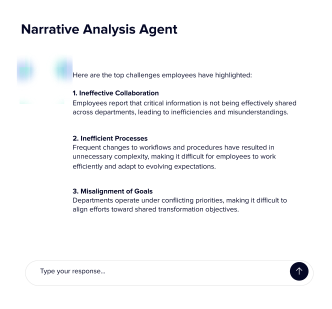
Plain-Language Questions, Sourced Answers
Plain-language questions of your comment data return synthesized, sourced responses. A query like "what barriers to performance do operations employees mention most?" returns themes, verbatim quotes, and demographic distribution, with no query language or data export required.
Topics cluster across thousands of responses without manual coding or tagging. Theme structures emerge from the data rather than from pre-built taxonomies, so the categories reflect what employees actually said.
The agent detects how employees feel about topics, including subtext that manual review misses. A theme appearing in 8% of comments with high emotional weight often outranks a theme in 30% with neutral sentiment, but the agent surfaces both so leaders can act on what employees care most deeply about, not only what they mention most often.
Representative employee quotes that exemplify each detected theme appear alongside the synthesis. Action plans stay grounded in the actual employee language behind the data, so executives and business stakeholders review the same evidence the analysis was built on.
Results filter by department, role, tenure, location, or any other dimension already configured in your Perceptyx survey data. Themes and sentiment cross-reference with the filters, so action planning targets the populations where issues are concentrated.
Frequently Asked Questions
No. Discriminative AI detects sentiment, intent, and subtext beyond word frequency. A theme in 8% of comments with high emotional weight often outranks a theme in 30% with neutral sentiment, and the agent surfaces both. The priority signal is the combination of how often something is said and how much weight is behind it, which keyword counts cannot detect.
Every synthesized theme arrives with the verbatim employee quotes that exemplify it, so HR leaders see the actual language behind each insight. Action plans stay grounded in what employees said, word for word, and can be shared with business stakeholders as primary evidence rather than analyst paraphrase.
Perceptyx is SOC 2 Type II certified, and the agent operates natively inside the Perceptyx platform. Open-text data never leaves the environment or gets exported to a third-party tool. Compliance posture matches the rest of your Perceptyx listening programs, including HITRUST CSF, FedRAMP, GDPR, and CCPA where applicable.
Traditional text-analytics tools return keyword frequencies and basic topic clusters. The Narrative Analysis Agent adds plain-language querying, sourced verbatim quotes for every theme, and full access to lifecycle context and demographic filters because it runs inside the Perceptyx People Activation System rather than as a separate text layer. Themes the agent surfaces can also feed Activate, so the same insight that lands in a report can launch a nudge or coaching campaign in the same platform.
No. The agent reads, synthesizes, and surfaces; the HR team interprets and acts. The methodology amplifies analyst and HRBP capacity rather than substituting for human judgment, which is what makes the output trustworthy enough to share with business leaders and executives.
Every open-text source collected in the Perceptyx platform: annual engagement, pulse, exit, onboarding, 360, and lifecycle programs. The agent can analyze open-text from multiple programs simultaneously, surfacing themes that cut across the full employee experience rather than being limited to a single survey.
The Narrative Analysis Agent is part of the Perceptyx platform, so there is no separate implementation, data migration, or third-party integration to stand up. Organizations already running listening programs in Perceptyx can use the agent against existing open-text data immediately.
Read Every Word Your Employees Write
The Narrative Analysis Agent lives inside the Perceptyx People Activation System. Get a demo to see firsthand how it surfaces themes, sentiment, intent, and the verbatim quotes that anchor what comes next.